
Photo: Collected
Recent flooding across central Iowa hasn't just covered roads and washed out yards; it's also complicated the start of sweet corn season. At Grimes Sweetcorn, crews are working through muddy conditions to keep one of Iowa's favorite summer staples on roadside stands.
When Grimes Sweetcorn crews headed out for the first day of harvest, Nate Christenson said they weren't simply picking corn; they were wading through flooded fields after torrential rain drenched their farmland.
"We woke up to five inches of rain," Christenson said. "Then we started picking and got another inch and a half of rain in about an hour. We had to call off picking, and we only had three trucks filled to go out to three stands."
Christenson, whose family has operated Grimes Sweetcorn for more than three decades, said longtime workers couldn't remember another opening day quite like it.
"All of us who've been here for years were definitely like, 'That is the craziest thing that's ever happened on the first day,'" Christenson said.
The heavy rain meant some metro stands opened with limited inventory or sold out much earlier than customers expected.
Too much water can hurt the crop
While corn thrives with warm temperatures and moisture, Christenson said there's a limit.
"Corn likes moisture, and it likes heat," he said. "But like anything, too much of anything can be a bad thing."
When fields stay saturated, he said, the problem isn't just muddy footing for harvest crews.
"Corn plants also need to be able to breathe. Their roots need oxygen," Christenson said. "If it's saturated for a couple days, it's going to start to die off."
Some lower areas of the fields have already begun showing signs of stress where standing water collected after the storms.
Every ear is still picked by hand
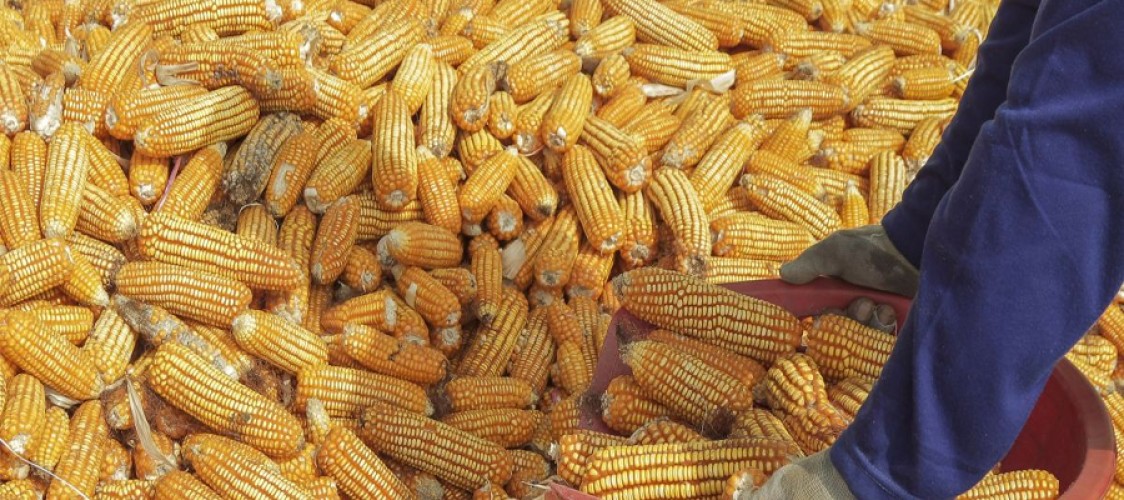
Despite advances in agricultural equipment, every ear of Grimes Sweetcorn is still harvested by hand. Crews work in teams, walking rows of corn before carrying dozens of ears at a time back to waiting pickup trucks. Christenson said the method allows workers to inspect every ear before it reaches customers.
The company owns a mechanical harvester, but chooses not to use it because machines harvest every ear regardless of quality. Hand-picking allows workers to leave behind immature ears or corn damaged by birds and deer. That attention to quality becomes even more difficult in muddy conditions.
"When we're starting a new season, we've usually got new crew members learning how to pick," Christenson said. "Walking through muddy fields while trying to learn how to identify the best ears just adds another layer of difficulty."
Even so, he said the company stands behind its product.
"If you get bad ears from us, we'll replace them. No questions asked," Christenson said.
Early season demand remains high
The challenging conditions come during one of the busiest times of the year. Christenson said the first couple weeks of sweet corn season routinely bring lines of eager customers, with some stands selling out by midday even in a normal year.
"The first two weeks can be very challenging just because of the craze of getting everybody's sweet corn fix in for the year," he said. See more.
You
can read South Asia's famous agricultural magazine on agricultural
reports through this link: https://gfmdhaka.com/
Source: Online/GFMM

























































Copyright © 2026 LIMRA Exhibitions. All Rights Reserved.
Website Design & Development ♡ MY SOFT IT
 EN
EN
 Chinese
 Turkish
 Indonesian
 German
 French
 Spanish
 Portuguese
 Russian
 Italian